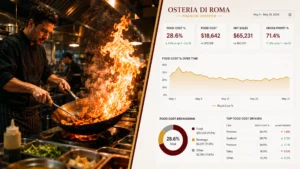

Seattle restaurant owners operate in one of the most competitive and cost-sensitive environments in the country. Food costs fluctuate. Labor is expensive. Delivery platforms take significant commission percentages. Rent is high. Sales tax compliance is mandatory. Washington B&O tax applies to gross receipts.
In this environment, small financial inaccuracies compound quickly. Many restaurant owners focus heavily on food quality, service experience, and marketing — but overlook the financial discipline that actually protects margins: monthly reconciliation.
Monthly reconciliation is not just an accounting task. It is a margin protection system.
What Monthly Reconciliation Actually Means
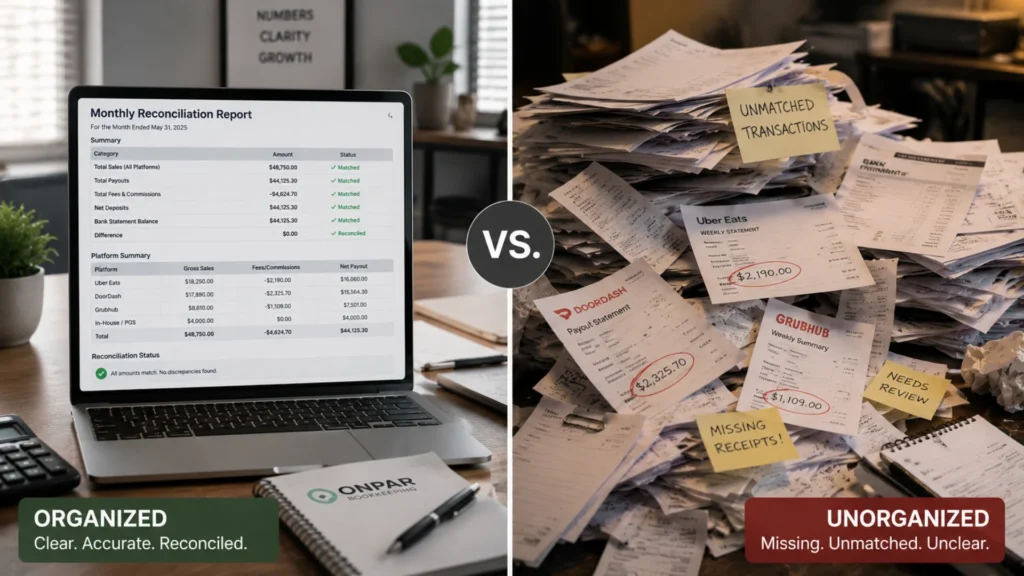
Monthly reconciliation is the process of matching accounting records to actual bank statements, verifying credit card balances, confirming payment processor deposits, reviewing payroll reports, ensuring sales tax liabilities are accurate, and validating vendor payments.
It confirms that your numbers reflect reality — not assumptions. Without reconciliation, your Profit & Loss statement may look complete but not be accurate. In a restaurant with tight margins, that distinction matters enormously.
Why Restaurants Are More Sensitive to Financial Inaccuracy
Restaurants typically operate on margins between 3% and 10%. Small discrepancies can erase profitability entirely. Seattle restaurant owners face rising ingredient costs, high minimum wage requirements, delivery app commission fees, utility volatility, sales tax obligations, and B&O tax on gross receipts. When margins are thin, reconciliation becomes critical — not optional.
1. Protecting Food Cost Margins
Food cost percentage is one of the most important metrics in restaurant management. If vendor invoices are entered incorrectly, recorded in the wrong month, missed entirely, or duplicated, your food cost percentage becomes unreliable.
Monthly reconciliation ensures all vendor payments match invoices, cost spikes are identified quickly, duplicate charges are caught, and missing entries are corrected. Accurate food cost tracking protects every pricing decision you make.
2. Managing Delivery Platform Fees Accurately
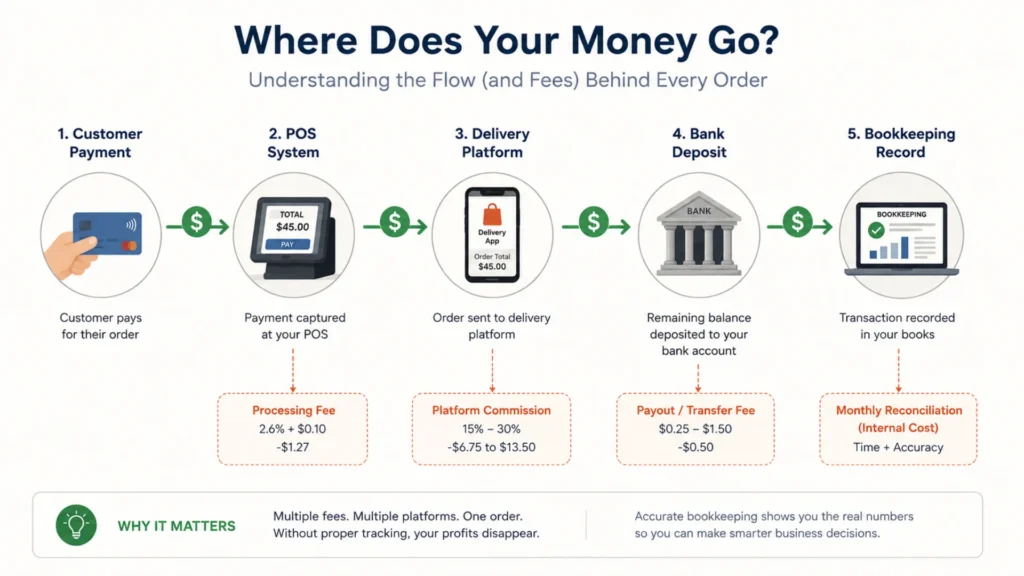
Seattle restaurants increasingly rely on Uber Eats, DoorDash, Grubhub, and other delivery platforms. These platforms deduct commission fees, apply service charges, remit net deposits, and charge promotional fees.
If reconciliation is not performed monthly, gross sales may be understated, commission expenses may be misclassified, sales tax may be miscalculated, and profitability per channel may be unclear. Delivery platform revenue must be reconciled against detailed statements — net deposits alone do not tell the full story.
3. Ensuring Sales Tax Accuracy
Restaurants collect sales tax on most transactions. Without reconciliation, collected tax may be blended with revenue, liability accounts may be inaccurate, and filing amounts may not match sales reports.
Collected sales tax is not revenue. Monthly reconciliation ensures sales tax collected matches POS reports, liability balances align with filings, and funds are separated properly. This prevents the artificial cash flow illusion that catches many restaurant owners off guard.
4. Monitoring Washington B&O Tax Exposure
Unlike income tax, Washington B&O applies to gross receipts — which means every dollar of revenue affects liability, growth increases tax immediately, and misclassified revenue distorts filings.
Monthly reconciliation confirms that reported revenue matches actual deposits, preventing both underreporting and overpayment.
5. Labor Cost Visibility
Payroll is often the largest expense category for Seattle restaurants. Reconciliation ensures payroll reports match bank withdrawals, payroll tax liabilities are recorded correctly, overtime costs are visible, and labor percentage trends are accurate.
When payroll entries are incorrect, labor percentages become misleading — and misleading labor percentages lead to poor staffing decisions that erode margins further.
6. Catching Vendor Errors Early
Restaurant vendors process high volumes of transactions, and errors happen. Without monthly reconciliation, duplicate charges go unnoticed, incorrect invoice amounts are paid, and subscription services accumulate silently.
Restaurants operate on thin margins. Vendor errors reduce profit quickly. Reconciliation protects against unnoticed loss — and in a competitive market like Seattle, that protection matters.
7. Preventing Cash Flow Illusions
A common issue in restaurants is relying solely on bank balances. But bank balances do not reflect sales tax owed, B&O accruals, pending payroll taxes, or outstanding vendor bills.
Monthly reconciliation aligns actual cash, recorded liabilities, and true available operating funds. Clarity prevents overspending — especially during periods of strong revenue when tax obligations are growing simultaneously.
8. Identifying Shrinkage or Fraud
Restaurants are vulnerable to inventory shrinkage, POS discrepancies, cash handling errors, and unauthorized vendor payments. Monthly reconciliation can reveal inconsistent sales reporting, unusual vendor patterns, and cash flow anomalies. Early detection protects profitability before small issues become significant losses.
9. Supporting Smarter Pricing Decisions
Menu pricing depends on accurate food cost, labor percentage, overhead allocation, and delivery platform margin impact. If financial data is inaccurate, pricing adjustments are guesses — and guesses in a thin-margin business carry real consequences.
Reconciliation ensures pricing decisions are data-driven, not instinct-driven.
10. Preparing for Seasonal Fluctuations
Seattle restaurants experience seasonal variability — summer tourism spikes, winter slowdowns, and event-driven demand changes. Monthly reconciliation supports rolling cash flow forecasting, reserve planning, staffing adjustments, and vendor order alignment. Seasonality requires precision, and precision starts with clean monthly books.
What Happens Without Monthly Reconciliation
Restaurants that reconcile quarterly or annually often experience large cleanup projects, significant CPA correction fees, tax surprises, margin confusion, cash flow strain, and stress during tax season. These problems rarely appear all at once — they accumulate over months of unreviewed data.
The Difference Between Quarterly and Monthly Oversight
Quarterly review often means problems are discovered late, margin drift continues unchecked, vendor errors compound, and tax accruals are estimated. Monthly reconciliation means issues are caught early, adjustments happen quickly, and margins are protected proactively. Frequency matters — especially in a restaurant environment where conditions change weekly.
Signs Your Restaurant Needs Stronger Reconciliation
- Food cost percentage fluctuates unexpectedly
- Labor percentage seems inconsistent month to month
- Delivery revenue feels unclear or unverified
- Sales tax payments feel unpredictable
- Your CPA performs significant year-end corrections
- Cash flow feels tighter than revenue would suggest
These are reconciliation gaps — and they are common across the Seattle restaurant industry.
What Proper Monthly Reconciliation Looks Like for Restaurants
A structured system includes bank and credit card reconciliation, POS-to-deposit matching, vendor invoice verification, payroll verification, sales tax liability review, B&O accrual update, delivery platform statement review, and financial statement validation.
Thin Margins Require Strong Financial Systems
Seattle restaurant owners already operate with intensity and precision in the kitchen. Financial systems require the same discipline. Monthly reconciliation protects food cost margins, labor percentages, tax compliance, cash flow stability, and long-term sustainability.
In a high-cost market, structure protects survival.
Ready to Strengthen Your Restaurant’s Financial Control?
On Par Bookkeeping LLC specializes in helping Seattle restaurant owners build the monthly reconciliation systems that protect margins, ensure tax compliance, and create reliable financial visibility.
A structured review can identify reconciliation gaps, sales tax exposure, delivery fee leakage, margin blind spots, and cleanup priorities.
Schedule Your Free Restaurant Financial Review. Seattle restaurant owners perform best when financial systems are as disciplined as their operations.