

Most Seattle business owners don’t start with broken books. They start busy.
Transactions pile up. Revenue grows. Expenses increase. Payroll expands. Tax filings approach. And bookkeeping slowly shifts from structured oversight to reactive cleanup — until a CPA requests year-end corrections, a tax notice arrives, or cash flow tightens unexpectedly.
At that moment, bookkeeping becomes urgent.
The problem is not that mistakes happened. The problem is that no system existed to prevent them. This guide explains how modern bookkeeping systems shift Seattle businesses from reactive cleanup to proactive financial control — and why that transition matters more here than almost anywhere else.
Why “Cleanup Mode” Is So Common
Most Seattle businesses operate in cleanup mode without realizing it. Reconciliations happen quarterly at best. Transactions are auto-categorized without review. Sales tax is only tracked when filing is due. B&O tax is calculated at the last minute. CPAs adjust entries every year-end.
Cleanup mode feels manageable — until complexity increases. And in Seattle’s regulatory environment, complexity increases fast.
The Real Cost of Cleanup Bookkeeping
Cleanup bookkeeping looks cheaper upfront. Over time, it generates hidden costs that compound:
Higher CPA fees. Accountants charge significantly more to fix disorganized books than to review clean ones.
Tax exposure. Late or miscalculated B&O and sales tax trigger penalties that could have been avoided with monthly tracking.
Cash flow surprises. Untracked liabilities distort your available cash and create strain at the worst possible moments.
Missed deductions. Poor categorization reduces tax efficiency, costing you money that should stay in the business.
Decision-making errors. When your reports are inaccurate, every business decision built on them is compromised.
Cleanup is always more expensive than prevention.
Why Seattle Businesses Feel These Costs Faster
Washington State’s regulatory environment is uniquely demanding. Seattle companies face B&O tax on gross receipts (not profit), sales tax collection responsibilities, high payroll sensitivity, and rapid growth cycles that compound every financial mistake.
When revenue increases, B&O liability increases immediately — even if margins are thin. Without structured bookkeeping, growth amplifies mistakes rather than rewarding discipline.
What Modern Bookkeeping Systems Actually Do
Modern bookkeeping is not manual data entry. It is a structured financial control system built around automation, monthly discipline, real-time tax awareness, and oversight — replacing reactive cleanup with proactive management.
At On Par Bookkeeping, we install this infrastructure for Seattle businesses. Here is how it works.
Step 1: Monthly Reconciliation as Non-Negotiable Infrastructure
Every bank and credit card account must be reconciled monthly. Reconciliation confirms transaction completeness, accurate balances, correct categorization, fraud detection, and liability alignment. Without it, financial reports are assumptions, not facts. Monthly discipline eliminates drift before it becomes damage.
Step 2: Real-Time Tax Liability Tracking
In Washington, this is critical. Modern systems accrue B&O monthly, track sales tax collected, separate tax funds from operating funds, and forecast quarterly payments. Taxes become predictable rather than disruptive.
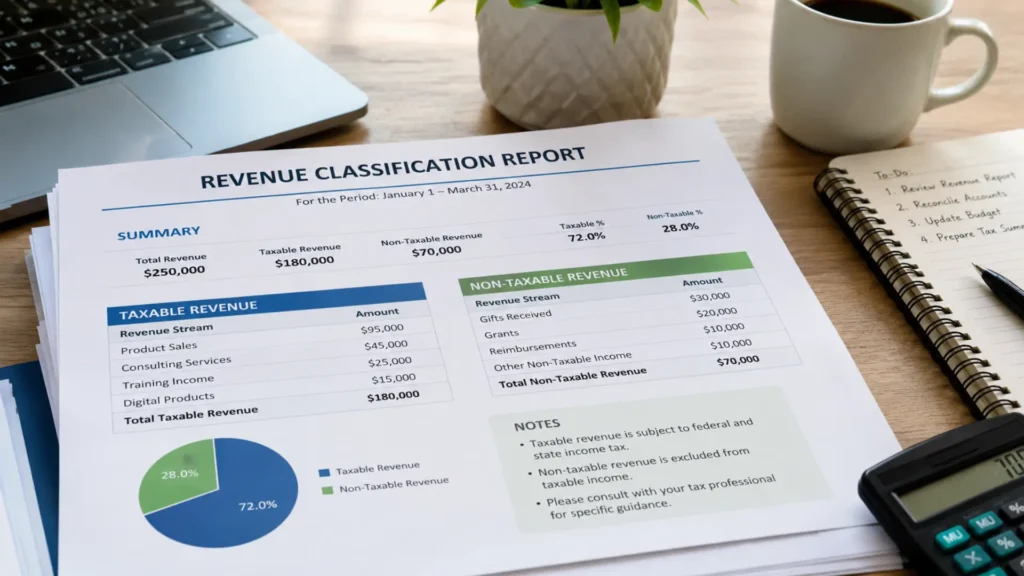
Step 3: Accurate Revenue Classification
Many costly mistakes begin with revenue misclassification. Modern bookkeeping ensures clean separation of taxable versus non-taxable revenue, gross revenue tracking before splits, and multi-stream income clarity. Revenue structure drives tax accuracy — and getting it wrong has direct consequences in a gross-receipts tax environment.
Step 4: Strategic Expense Structuring
Automation categorizes expenses. Modern systems review them strategically. Proper expense structuring supports deduction optimization, margin clarity, budget forecasting, and performance benchmarking. Expense visibility strengthens financial control across the business.
Step 5: Cash Flow Forecasting
With accurate data, forecasting becomes possible. A rolling 90-day forecast identifies payroll timing, vendor obligations, tax deadlines, and hiring or equipment decisions before they become emergencies. Forecasting prevents cash strain before it develops.
The Shift From Cleanup to Control
The transition from reactive to proactive bookkeeping happens in three distinct phases.
Phase 1 — Stabilize. Reconcile all accounts, identify tax exposure, correct misclassifications, and generate accurate financial statements. Stabilization restores clarity.
Phase 2 — Standardize. Install monthly close procedures, set a reporting cadence, implement tax accrual tracking, and align the chart of accounts with the business model. Standardization reduces variation.
Phase 3 — Optimize. Introduce forecasting, evaluate margins, adjust spending patterns, coordinate tax strategy, and plan growth with confidence. Optimization creates competitive advantage.
The Most Common Mistakes Modern Systems Eliminate
Sales tax drift. Collected tax blended with operating funds creates artificial cash flow. Modern systems separate and monitor it consistently so there are no surprises when remittance is due.
B&O underestimation. Because Washington taxes gross receipts, misclassification creates immediate liability. Monthly accrual prevents surprises at filing time.
Automation without oversight. AI can categorize transactions quickly. It cannot interpret business context. Human review ensures accuracy — especially for edge cases that automated tools misread.
Payroll misalignment. Payroll must align with revenue timing. Modern systems monitor expense ratios proactively and flag imbalances before they stress cash flow.
CPA cleanup dependency. When books are clean monthly, year-end becomes a review — not a repair project. This directly reduces accounting fees and the stress that accompanies them.
Why Control Reduces Business Stress
Seattle business owners often carry financial stress quietly. It shows up as hesitation to hire, delayed investment decisions, anxiety before tax deadlines, and avoidance of financial reports altogether.
Control changes that. When books are accurate and current, decisions become data-driven, taxes become predictable, growth feels intentional, and conversations with lenders become straightforward. Financial infrastructure reduces pressure — it doesn’t just organize numbers.
The Role of AI in Modern Bookkeeping
Automation plays a powerful role in modern bookkeeping systems. AI enhances transaction processing speed, pattern recognition, document matching, and reporting efficiency. But AI alone does not replace oversight. Technology accelerates systems. Systems require human supervision to remain accurate and context-aware.
This is an important distinction for any Seattle business evaluating bookkeeping solutions: automation is a tool, not a strategy.
Signs Your Business Is Still in Cleanup Mode
If any of these describe your current situation, your business is operating reactively:
- Books are not reconciled monthly
- You rely on bank balances rather than financial statements
- Tax liabilities feel unclear until filing approaches
- Your CPA performs frequent corrections at year-end
- Financial reports are weeks or months out of date
- Business growth feels financially chaotic rather than controlled
Cleanup mode feels manageable — until complexity makes it untenable.
Financial Infrastructure in 2025
Modern bookkeeping is no longer back-office administration. It is risk management, compliance protection, cash flow control, and growth infrastructure. Businesses that operate with structured financial systems consistently outperform those that rely on reactive cleanup — because they make better decisions with better information.
Delaying system installation typically results in larger cleanup projects, increased accounting costs, greater tax exposure, reduced decision clarity, and missed growth opportunities. Prevention is more affordable than correction, and the gap widens as the business grows.

Control Is a System, Not a Moment
Cleanup solves a problem temporarily. Control prevents it permanently.
Seattle businesses that invest in modern bookkeeping systems gain predictable taxes, clear cash flow, accurate reporting, lower financial stress, and stronger positioning for growth. Bookkeeping is not about fixing mistakes. It is about building infrastructure that eliminates them.
Ready to Move From Cleanup to Control?
On Par Bookkeeping works exclusively with Seattle-area businesses to install modern bookkeeping systems — from initial stabilization through monthly oversight and strategic reporting.
A structured review can identify reconciliation gaps, tax exposure, expense misalignment, reporting inconsistencies, and system installation priorities specific to your business.
Schedule your free bookkeeping review at onparbookkeepingllc.com → Seattle businesses perform best when financial systems are installed intentionally — not reactively.