

Running a business in Seattle is capital-intensive. Rent is high. Payroll is competitive. Vendor costs are rising. Taxes are ongoing. Growth is expensive.
And yet, many Seattle businesses that generate strong revenue still feel financial pressure. The issue is rarely revenue alone. The issue is cash flow visibility.
This guide is written specifically for Seattle small business owners who want predictable financial control, not financial surprises. Whether you run a service business, healthcare practice, professional firm, or startup, real-time bookkeeping is the system that prevents small issues from becoming full financial crises.
Why Cash Flow Is More Volatile in Seattle’s High-Cost Market
Seattle businesses operate under several pressures:
- High fixed overhead (rent, payroll, utilities)
- Washington B&O tax on gross receipts
- Sales tax compliance requirements
- Delayed client or insurance payments
- Competitive labor markets
- Rapid growth cycles in tech and service sectors
In this environment, profitability does not guarantee stability. A business can be profitable on paper and still experience a cash crisis if timing is mismanaged. Cash flow is about timing — not just totals.
What a Cash Flow Crisis Really Looks Like (Before It’s Obvious)
A cash flow crisis is not bankruptcy. It usually looks like:
- Struggling to make payroll
- Delaying vendor payments
- Scrambling to cover tax deadlines
- Using personal funds to float the business
- Overdrawing accounts unintentionally
- Avoiding looking at bank balances
Most of these scenarios develop gradually. They begin with incomplete bookkeeping.
The Hidden Risk: Why Lagging Financial Data Creates Instability
Many Seattle businesses rely on:
- Quarterly CPA reviews
- Annual tax preparation
- Bank balance checking
- Software dashboards without reconciliation
These tools show activity — but not clarity.
Without monthly reconciliation and real-time reporting, business owners operate on outdated data. By the time financial reports are reviewed, the opportunity to prevent strain has already passed. Real-time bookkeeping closes this gap.
What Real-Time Bookkeeping Actually Means
Real-time bookkeeping does not mean checking your bank daily. It means:
- Monthly bank and credit card reconciliations
- Accurate classification of revenue and expenses
- Clear tracking of accounts receivable and payable
- Visibility into tax liabilities before deadlines
- Updated financial statements every month
- Cash flow forecasting based on actual patterns
This system turns guesswork into predictability.
Seattle-Specific Cash Flow Risks Every Business Owner Must Track
1. Washington B&O Tax on Gross Receipts
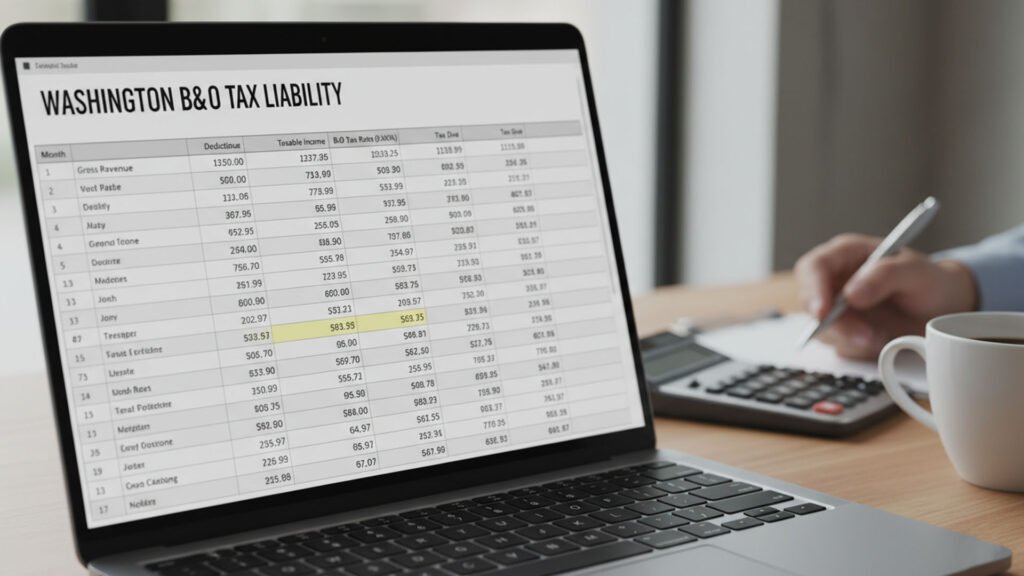
Because Washington taxes gross revenue, not profit:
- Businesses owe tax even in low-margin months
- Growth increases liability immediately
- Revenue spikes can create tax strain
Without monthly tracking, B&O obligations feel sudden — even though they were predictable.
2. Sales Tax Segregation
Retail and certain service businesses must:
- Collect sales tax correctly
- Track taxable vs non-taxable revenue
- Remit payments on schedule
If sales tax collected is not separated from operating funds, it creates artificial cash flow. That money was never yours to spend.
3. Payroll Pressure
Seattle’s competitive labor market means payroll often represents the largest fixed expense. Without cash flow planning:
- Hiring decisions outpace revenue timing
- Benefits and payroll taxes create strain
- Growth feels stressful instead of strategic
Payroll must align with inflows — not assumptions.
4. Delayed Receivables
Service businesses, contractors, healthcare practices, and startups often face delayed payments.
Without receivables visibility:
- Owners assume money is “coming soon”
- Spending decisions happen prematurely
- Collections lag unnoticed
Real-time bookkeeping makes receivables visible.
How Real-Time Bookkeeping Prevents Financial Crises
1. It Exposes Burn Rate Early
Burn rate is not just for startups. Every business has a baseline monthly cost to operate. When books are updated monthly, you know:
- Your true operating baseline
- Your margin buffer
- Your revenue targets
- Your runway during slow periods
Clarity reduces reaction.
2. It Tracks Tax Liabilities Continuously
Instead of discovering tax obligations at filing time, real-time bookkeeping:
- Accrues B&O monthly
- Tracks sales tax separately
- Projects quarterly payments
- Prevents deadline surprises
Taxes become scheduled — not stressful.
3. It Aligns Spending With Reality
When financial reports are current:
- Owners see profit trends clearly
- Expense creep is visible
- Vendor costs can be adjusted early
- Pricing decisions are informed
Small adjustments prevent large corrections.
4. It Protects Against Bank Account Disruptions
Many account holds and freezes stem from:
- Unresolved tax notices
- Filing discrepancies
- Payment mismatches
Clean books reduce compliance errors and escalation risk.
The Most Common Cash Flow Mistakes Seattle Businesses Make
Even successful companies fall into these patterns:
- Relying solely on bank balances
- Treating bookkeeping as annual cleanup
- Ignoring B&O accruals
- Spending collected sales tax
- Avoiding financial statement review
- Scaling payroll faster than receivables
These mistakes build gradually and surface at inconvenient times.
What Healthy Cash Flow Management Looks Like
A Seattle business with strong cash flow systems has:
- Monthly reconciled books
- Updated Profit & Loss statements
- Clear visibility into accounts receivable
- Separate tracking of tax liabilities
- Cash reserve planning
- Spending decisions tied to real margins
This structure creates confidence.
Cash Flow Forecasting: The 90-Day Planning Advantage
Real-time bookkeeping enables forward planning. A simple 90-day forecast can show:
- Expected inflows
- Payroll timing
- Vendor obligations
- Tax deadlines
- Equipment purchases
- Hiring feasibility
Forecasting does not require complex modeling — it requires accurate data. Bookkeeping provides that foundation.
Signs Your Seattle Business Is at Risk of a Cash Flow Crisis
If any of these apply, your financial system needs attention:
- Payroll feels tight some months
- Tax deadlines create stress
- You don’t know your current B&O liability
- Financial reports are outdated
- You rely on personal funds occasionally
- Growth feels chaotic instead of controlled
These are visibility issues, not necessarily revenue issues.
How to Choose a Seattle Bookkeeper Focused on Cash Flow Strategy
If cash flow stability is the goal, look for a bookkeeper who provides:
- Monthly reconciliation guarantees
- Clear reporting cadence
- Real-time tax tracking
- Receivables monitoring
- Expense categorization aligned with strategy
- Collaboration with your CPA
- Understanding of Washington B&O and sales tax
Bookkeeping should support decisions — not just compliance.
Cash Flow Stability as a Competitive Advantage

Seattle’s business environment rewards precision. Companies that manage cash flow proactively:
- Hire with confidence
- Invest strategically
- Survive slow seasons
- Avoid debt stress
- Negotiate from strength
- Grow sustainably
Cash flow clarity reduces pressure at every level.
When It’s Time to Upgrade Your Cash Flow Systems
It’s time to act if:
- Your books aren’t reconciled monthly
- You avoid reviewing financial statements
- Tax payments feel unpredictable
- You’re planning expansion
- You’re hiring additional staff
- Revenue is growing quickly
Financial infrastructure should evolve with growth.
Final Thoughts: Cash Flow Is Infrastructure, Not Guesswork
Seattle businesses operate in a fast-moving, high-cost environment. Real-time bookkeeping transforms cash flow from reactive to proactive. It prevents crises before they start.
When your numbers are accurate and current, you gain:
- Control over taxes
- Visibility into margins
- Confidence in hiring
- Stability during growth
- Reduced stress across the business
Need Help Strengthening Cash Flow in Your Seattle Business?
A professional review of your current bookkeeping can uncover:
- Hidden tax exposure
- Receivables gaps
- Expense inefficiencies
- Cash flow vulnerabilities
- Cleanup priorities
Seattle businesses perform best when their financial systems are as strong as their operations. Schedule a cash flow assessment with On Par Bookkeeping LLC today and regain financial control.