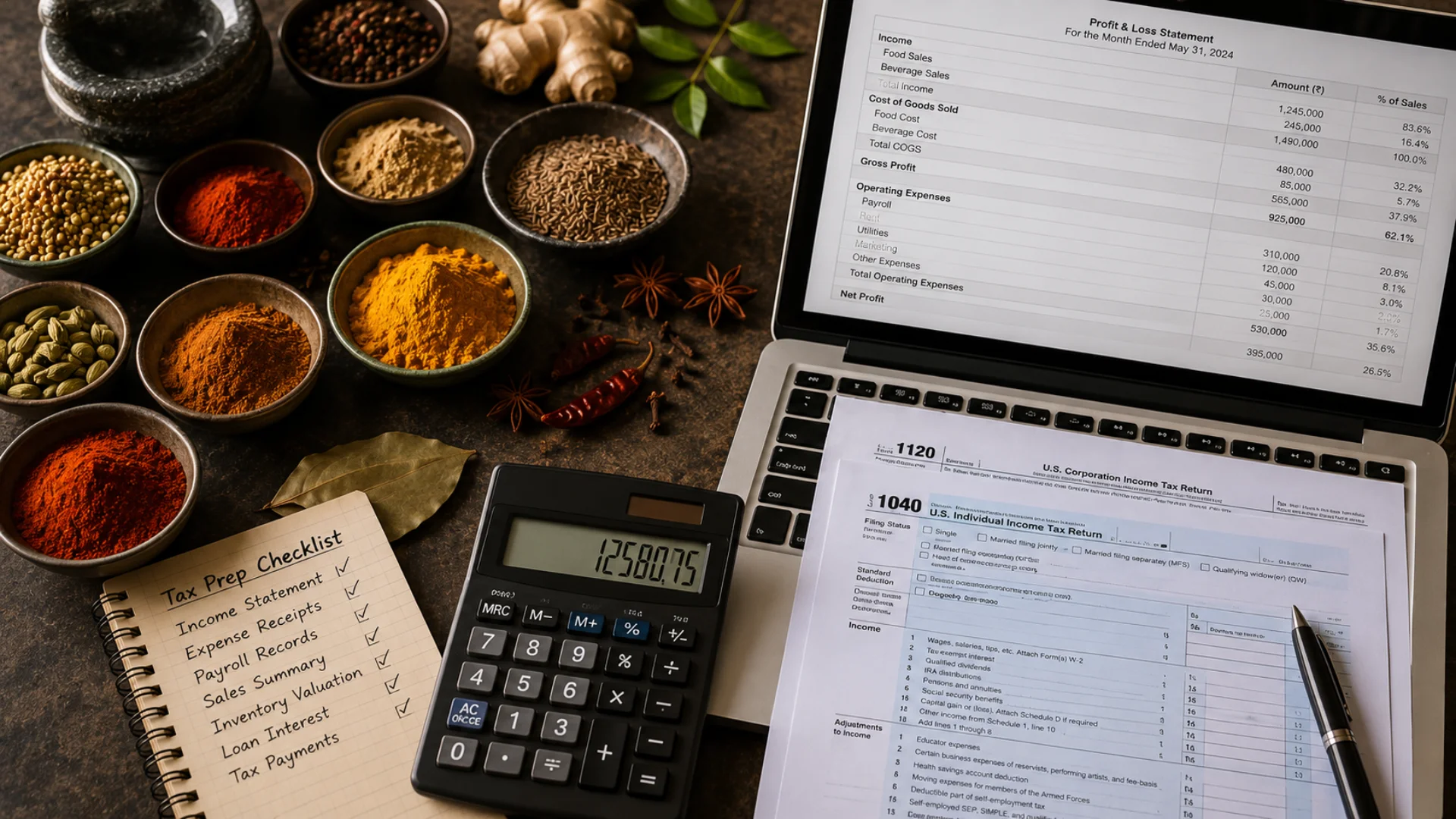
Indian restaurants are a vibrant and essential part of Seattle’s dining landscape. From family-owned curry houses to modern regional concepts, Indian restaurants often operate with complex spice inventories, high dairy usage (ghee, paneer, yogurt), protein-heavy dishes, catering services, buffet models, and delivery platform partnerships.
Behind the rich flavors and hospitality lies a financial reality: margins are tight, labor is expensive, delivery apps reduce net revenue, Washington B&O tax applies to gross receipts, and sales tax compliance is mandatory.
Tax season becomes stressful when bookkeeping has not been structured throughout the year. The solution is not scrambling in March or April. The solution is preparation. This guide explains how Indian restaurant owners in Seattle can prepare for tax season methodically — eliminating last-minute chaos and protecting margins.
Why Tax Season Feels Overwhelming for Restaurant Owners
For many restaurant owners, stress during tax season is caused by unreconciled bank accounts, unclear sales tax balances, B&O liabilities that were not tracked, delivery platform reporting confusion, mixed personal and business expenses, and CPA cleanup adjustments.
These issues build gradually. When filing time arrives, they surface all at once. Preparation prevents pressure.
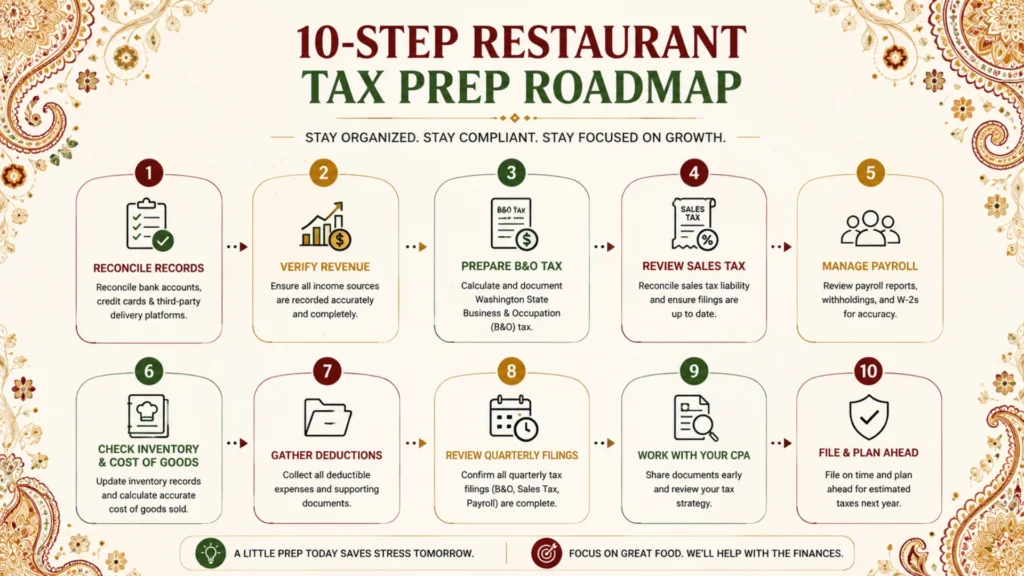
Step 1: Reconcile All Accounts Before Year-End
The foundation of tax preparation is monthly reconciliation. Indian restaurants should reconcile business bank accounts, credit cards, POS settlement accounts, delivery platform statements, payroll reports, and loan balances.
Reconciliation ensures deposits match POS sales, vendor payments match invoices, payroll withdrawals align with payroll reports, and no duplicate or missing entries exist. Without reconciliation, tax returns rely on incomplete data. Accuracy reduces correction work later.
Step 2: Confirm Revenue Is Recorded Properly
Indian restaurants often generate revenue from dine-in, takeout, delivery platforms, catering, buffet service, and private events. Each revenue stream may have different tax treatment, timing, and reporting requirements.
Tax preparation requires confirming that gross revenue is recorded accurately, delivery platform gross sales are recorded before commission deductions, catering income is included, and gift card activity is tracked properly. Washington B&O tax applies to gross receipts, so revenue clarity is critical to getting filings right.
Step 3: Review Washington B&O Tax Filings
Washington State taxes businesses on gross revenue. Before tax filing season, confirm all filing periods were submitted, revenue classifications were correct, accrued B&O matches filed amounts, and no reporting gaps exist.
Even during slower months, B&O liability continues. Monthly accrual tracking prevents surprises that otherwise show up all at once during filing season.
Step 4: Verify Sales Tax Accuracy
Indian restaurants collect sales tax on most food sales. Preparation includes reviewing taxable vs. non-taxable sales, POS sales reports, delivery platform tax handling, sales tax liability balances, and filed returns.
Delivery platforms may collect and remit tax on your behalf or include tax in settlement statements. Bookkeeping must reconcile these differences. Collected sales tax is not revenue — clear separation prevents confusion at filing time.
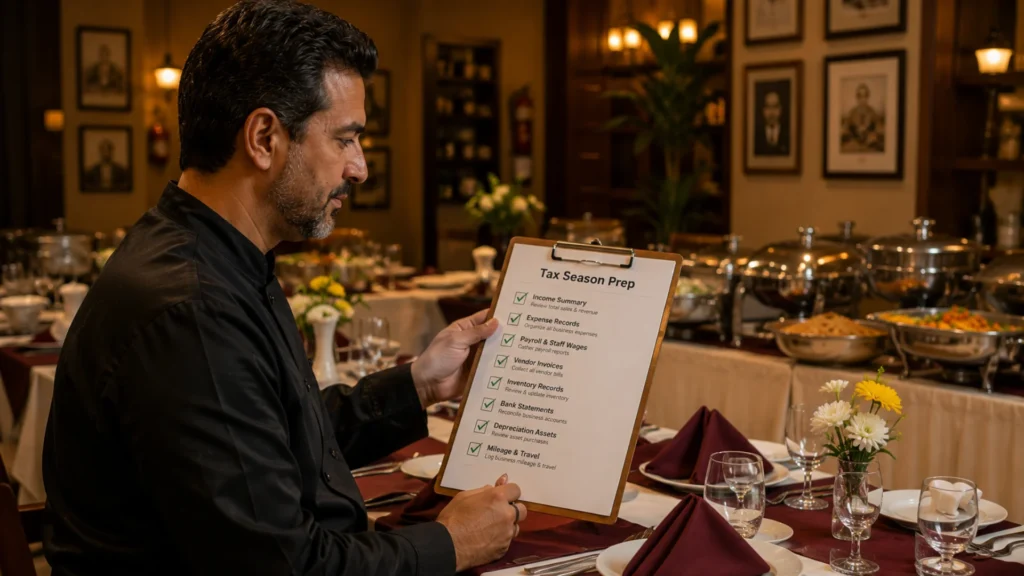
Step 5: Review Food Cost & Vendor Expense Categorization
Indian restaurants often purchase specialty spices, lentils and rice, fresh vegetables, dairy products, halal meats, and imported ingredients. Before tax season, confirm food purchases are categorized correctly, supplies are not mixed with food costs, equipment purchases are separated properly, and large purchases are reviewed for capitalization. Proper categorization supports deduction accuracy across the board.
Step 6: Prepare 1099 Reporting for Contractors
Indian restaurants may pay catering staff, musicians or event performers, cleaning services, marketing contractors, and repair technicians. If annual payments exceed reporting thresholds, 1099 forms may be required.
Preparation includes confirming contractor totals, collecting W-9 forms, and verifying payment accuracy. Tracking contractor payments monthly makes January significantly simpler.
Step 7: Confirm Payroll & Payroll Taxes
Payroll preparation includes matching payroll reports to bank withdrawals, confirming payroll tax liabilities, reviewing overtime exposure, and ensuring quarterly payroll filings were completed. Seattle’s wage environment makes payroll sensitive — accurate payroll tracking prevents filing complications down the line.
Step 8: Separate Personal & Business Finances
Tax filing becomes complicated when personal expenses run through business accounts, business revenue is deposited into personal accounts, or transfers are undocumented. Clean separation reduces CPA adjustment time and improves overall accuracy.
Step 9: Plan Large Purchases Strategically
With accurate books before year-end, restaurant owners can evaluate equipment purchases, consider kitchen upgrades, assess vehicle purchases, and time capital investments. Tax planning requires current financial data — last-minute decisions without clear books create uncertainty that’s hard to undo.
Step 10: Review Financial Statements Before Sending to CPA
Before filing, Indian restaurant owners should review the Profit & Loss statement, Balance Sheet, sales tax liability, B&O accrual balance, and payroll summary. Understanding these reports ensures confidence before submission, and clean books reduce CPA correction fees significantly.
How Monthly Bookkeeping Eliminates Tax Stress
When books are reconciled monthly, revenue is accurate, expenses are categorized, sales tax is tracked, B&O is accrued, and payroll is verified. Tax season becomes a review process — not reconstruction. No scrambling for statements, no guessing at totals, no unexpected corrections. Preparation creates calm.
Common Tax-Season Mistakes Indian Restaurant Owners Make
- Recording only net delivery deposits
- Ignoring B&O accruals
- Mixing sales tax with revenue
- Waiting until year-end to categorize expenses
- Not tracking contractor payments
- Failing to reconcile POS deposits monthly
These habits create unnecessary stress that structure can prevent entirely.
Why This Matters More in Seattle
Seattle’s environment includes high payroll costs, elevated rent, competitive food sourcing, strict B&O enforcement, and sales tax complexity. Small bookkeeping gaps can create compliance risk. Consistent preparation protects the business throughout the year, not just in April.
Signs You Need Better Tax Preparation Systems
- You are unsure of your current B&O liability
- Sales tax payments feel unpredictable
- Your CPA performs significant cleanup
- Vendor expenses are lumped into broad categories
- Payroll totals are unclear
- Filing season feels rushed every year
These are system signals, not isolated annual inconveniences.
Financial Infrastructure Supports Peace of Mind
Indian restaurants often operate with family involvement, long hours, cultural celebration, and community focus. Financial systems should reduce stress — not add to it. Consistent bookkeeping reduces filing time, improves deduction accuracy, prevents compliance issues, protects cash flow, and creates confidence.
Tax season should confirm discipline, not test it.
Preparation Is Built All Year
Tax season is not one month. It reflects twelve. Seattle Indian restaurant owners who reconcile monthly, track B&O consistently, separate sales tax, categorize expenses properly, and monitor payroll experience smoother filings and lower stress.
Preparation creates predictability. Predictability creates stability.
Ready to Simplify Tax Season for Your Restaurant?
On Par Bookkeeping LLC helps Seattle Indian restaurant owners build the year-round bookkeeping systems that make tax season simple, predictable, and stress-free.
A structured review can identify reconciliation gaps, tax liability exposure, delivery reporting inconsistencies, payroll tracking issues, and cleanup priorities.
Schedule Your Free Tax Season Readiness Review. Seattle Indian restaurant owners perform best when financial systems support their operations — not complicate them.