Afghan restaurants bring something special to Seattle’s dining community. Fresh naan from the oven. Kabuli pulao layered with flavor. Slow-cooked qorma. Grilled kebabs. Family-style hospitality.
But behind the warmth and tradition is a financial reality: restaurant margins are thin, ingredient costs fluctuate, labor costs in Seattle are high, delivery platforms compress profit, Washington B&O tax applies to gross receipts, and sales tax compliance is mandatory.
For Afghan restaurant owners, cash flow stability is often the difference between surviving and thriving. Better bookkeeping does not simply organize transactions. It stabilizes cash flow. This guide explains how structured financial systems help Seattle Afghan restaurants manage volatility, control expenses, and create predictable operating cash.
Why Afghan Restaurants Face Unique Cash Flow Challenges
Afghan cuisine often relies on high-quality rice and spices, fresh herbs and vegetables, halal meats, specialty imports, house-made bread, and labor-intensive preparation. Many Afghan restaurants are family-run and community-focused, which often means thin pricing margins, high food preparation time, extended hours, lean staffing, and high ingredient turnover.
In Seattle’s competitive restaurant market, even small financial inefficiencies affect liquidity quickly. Cash flow is not just about revenue — it is about timing, structure, and clarity.
Understanding the Difference Between Profit and Cash Flow
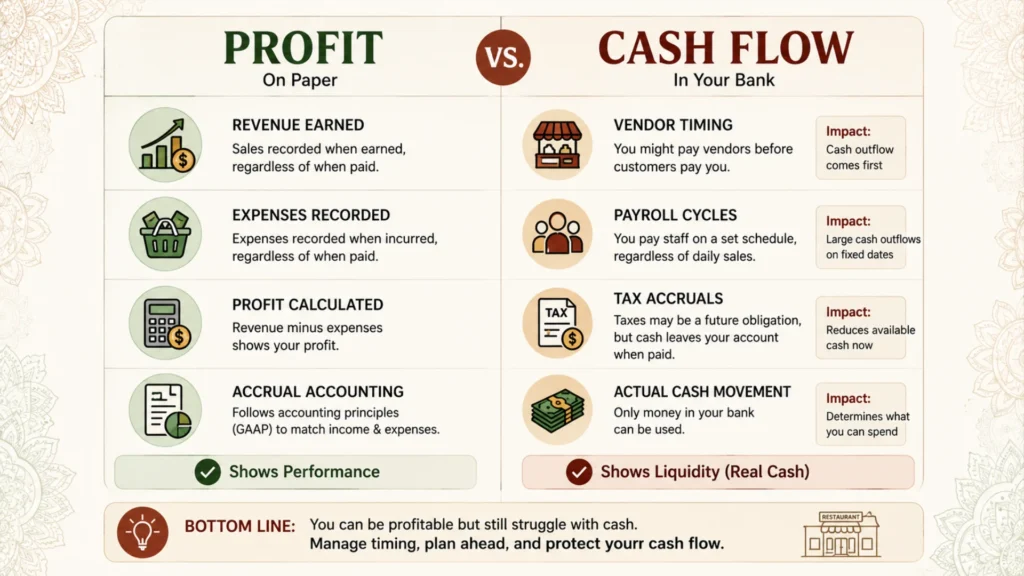
A restaurant may show profit on paper but still struggle with cash. Why? Because cash flow is affected by vendor payment timing, payroll cycles, sales tax liability, B&O tax accruals, delivery platform settlements, and equipment purchases.
Without accurate bookkeeping, these moving pieces become unpredictable. Stability requires visibility into all of them at once.
1. Monthly Reconciliation: The Foundation of Stability
Monthly reconciliation confirms bank balances match accounting records, vendor payments are accurate, delivery deposits align with sales, payroll matches reports, and tax liabilities are recorded correctly.
Without reconciliation, cash position is uncertain. Afghan restaurants operating with tight margins cannot afford that uncertainty. Reconciliation creates the clarity needed to make confident decisions.
2. Managing Vendor Payments & Ingredient Costs
Afghan restaurants often purchase from specialty import vendors, local produce suppliers, halal meat distributors, and rice and bulk goods providers. Vendor costs fluctuate.
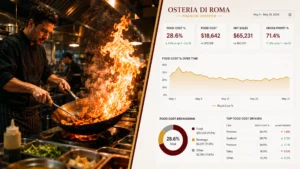
Monthly bookkeeping allows owners to compare month-over-month food cost, identify price increases, catch duplicate charges, and evaluate ordering patterns. If food cost rises without being tracked, margins shrink silently. Visibility supports negotiation and timely adjustment.
3. Monitoring Food Cost Percentage
Food cost percentage must be reviewed monthly. To calculate it accurately, bookkeeping must record all purchases in the correct month, separate food costs from supplies, and track cost of goods sold consistently.
Even a small percentage increase in rice, lamb, or imported spices impacts overall margin. Accurate tracking prevents this kind of drift from going unnoticed.
4. Payroll Timing and Labor Control
Seattle’s wage environment increases payroll sensitivity. Afghan restaurants often employ kitchen staff, front-of-house servers, family members, and part-time support staff. Payroll typically represents one of the largest expenses.
Better bookkeeping allows owners to monitor labor percentage, compare payroll to revenue monthly, identify overtime trends, and adjust scheduling seasonally. If labor cost increases faster than revenue, cash flow tightens quickly — monitoring prevents that strain from becoming a surprise.
5. Delivery Platforms & Cash Timing
Many Seattle Afghan restaurants rely on Uber Eats, DoorDash, and Grubhub. These platforms deduct commissions, remit net deposits, apply marketing fees, and may handle sales tax differently.
If bookkeeping records only net deposits, revenue appears lower than actual, commission costs are hidden, and cash timing becomes unclear. Monthly reconciliation should record gross sales, separate platform fees, confirm deposit accuracy, and track settlement timing. Cash flow depends on understanding when revenue actually arrives, not just the final deposit amount.
6. Washington B&O Tax: Gross Receipts Impact Cash Flow
Washington’s B&O tax applies to gross revenue, which means tax is owed even if margins are tight, every dollar of revenue affects liability, and growth increases tax immediately.
Without monthly accrual tracking, payments feel sudden and cash flow feels unpredictable. Better bookkeeping tracks B&O monthly, so tax payments are anticipated — not disruptive. Predictability reduces stress considerably.
7. Sales Tax Separation Prevents Artificial Cash
Restaurants collect sales tax on most transactions. Collected tax is not revenue. If sales tax is not separated properly, bank balance may appear higher than usable cash, and tax payments may create sudden strain.
Monthly liability tracking ensures collected tax is accounted for, funds are not unintentionally spent, and filing matches bookkeeping. Separation protects liquidity in a way that bank-balance monitoring alone cannot.
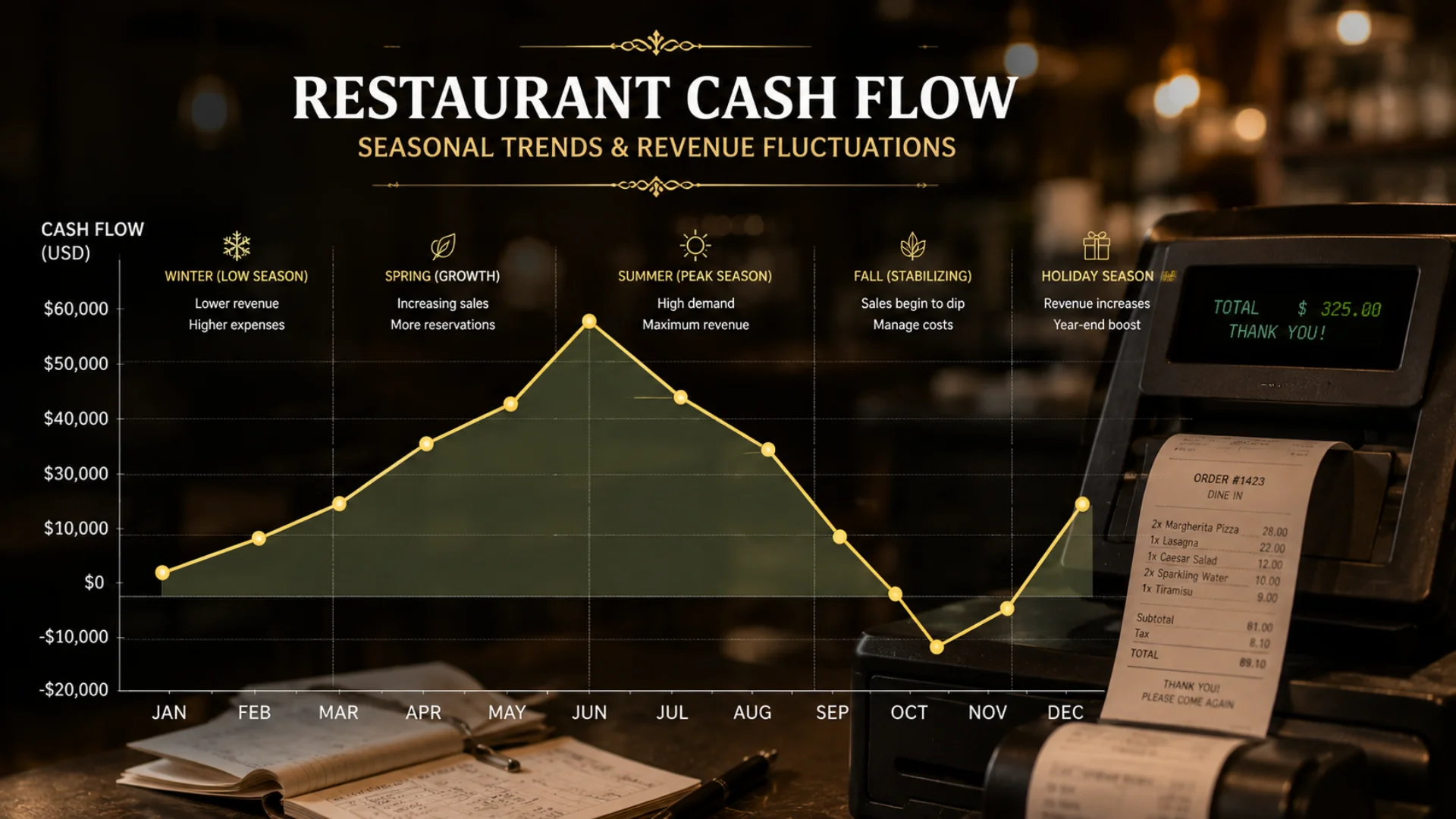
8. Seasonal Revenue Planning
Seattle restaurants experience summer tourism spikes, winter slowdowns, weather-related variability, and holiday fluctuations. Afghan restaurants often see increased dine-in during colder months and catering spikes during events.
Monthly revenue tracking allows owners to forecast slow months, build cash reserves during strong months, adjust staffing seasonally, and align vendor ordering. Seasonal planning depends entirely on accurate books.
9. Identifying Small Financial Leaks
Common cash flow drains include duplicate vendor charges, rising subscription costs, portion control inconsistencies, ingredient waste, and unmonitored delivery fees. Monthly financial review reveals these patterns early — prevention stabilizes cash before small leaks add up to a real problem.
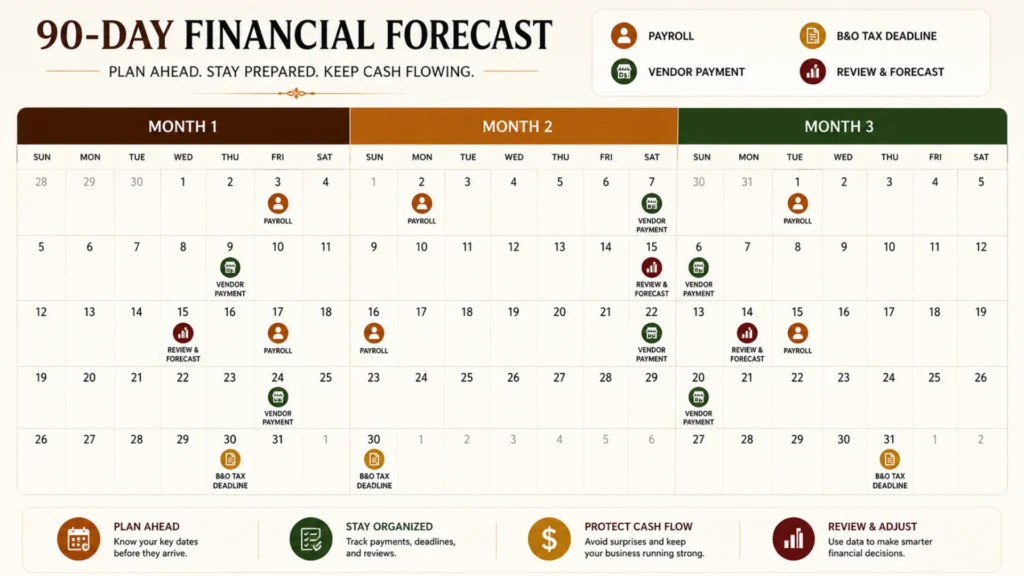
10. Building a 90-Day Cash Flow Forecast
Once books are accurate, forecasting becomes possible. A simple 90-day forecast helps owners see payroll timing, vendor obligations, tax deadlines, equipment purchases, and reserve levels. Forecasting transforms stress into planning — and planning is what separates stable restaurants from reactive ones.
Common Cash Flow Mistakes Afghan Restaurant Owners Make
- Relying solely on bank balance
- Recording only net delivery deposits
- Ignoring B&O accruals
- Mixing sales tax with operating funds
- Reviewing financials only quarterly
- Waiting until tax season for cleanup
These habits create instability. Structure reduces volatility significantly.
What Better Bookkeeping Looks Like
A structured system includes monthly bank and credit card reconciliation, POS-to-deposit matching, vendor invoice verification, payroll confirmation, B&O accrual tracking, sales tax liability monitoring, delivery platform reconciliation, and monthly financial review. Consistency creates predictability.
Why This Matters More in Seattle
Seattle’s restaurant environment includes high labor costs, elevated rent, competitive ingredient sourcing, and strict tax compliance. Small inefficiencies multiply quickly. Cash flow stability requires discipline — and that discipline is built one month at a time.
Financial Infrastructure Supports Longevity
Many Afghan restaurants are family businesses built on tradition and community. Long-term stability requires margin awareness, predictable tax payments, controlled labor costs, seasonal planning, and vendor discipline. Bookkeeping supports all of these areas at once.
Signs It’s Time to Strengthen Your Financial System
- Cash flow feels inconsistent
- B&O payments feel surprising
- Sales tax causes stress
- Labor percentage is unclear
- Vendor costs fluctuate unpredictably
- CPA cleanup costs are increasing
These are system indicators that point to a clear next step.
Stability Is Built on Structure
Afghan cuisine reflects patience, balance, and craftsmanship. Financial systems should reflect the same principles. Better bookkeeping stabilizes cash flow, tax obligations, vendor relationships, labor management, and seasonal revenue planning.
In Seattle’s high-cost environment, structure protects sustainability.
Ready to Strengthen Your Restaurant’s Cash Flow Stability?
On Par Bookkeeping LLC helps Seattle Afghan restaurant owners build the monthly bookkeeping systems that turn unpredictable cash flow into stable, plannable operations.
A structured review can identify vendor overcharges, delivery fee leakage, tax exposure, labor inefficiencies, and cash flow blind spots.
Schedule Your Free Cash Flow Review. Seattle Afghan restaurant owners perform best when financial systems support the strength of their kitchens.