
Thai restaurants are a staple of Seattle’s dining scene. From neighborhood takeout spots to upscale dining concepts, Thai cuisine is built on balance, sweet, sour, salty, spicy, layered with fresh herbs, coconut milk, seafood, curry pastes, and specialty ingredients.
But behind the flavor balance lies a financial balancing act. Ingredient costs fluctuate. Fresh herbs spoil quickly. Coconut milk and imported sauces rise in price. Labor is expensive in Seattle. Delivery platforms compress margins. Washington Business & Occupation (B&O) tax applies to gross receipts. Sales tax compliance is required.
In this environment, bookkeeping is not paperwork. It is margin protection.
This guide explains how structured bookkeeping systems help Seattle Thai restaurant owners manage ingredient volatility, control labor pressure, and protect profitability.
Why Seattle Thai Restaurants Face Rising Food Cost Pressure
Thai cuisine depends heavily on:
- Fresh basil, cilantro, and lemongrass
- Coconut milk
- Imported curry pastes
- Fish sauce
- Rice and noodles
- Fresh seafood
- House-made sauces
These ingredients create:
- Short shelf life exposure
- Price volatility
- Waste risk
- Inventory sensitivity
Even small cost increases in coconut milk or seafood can reduce overall margin. Seattle’s high-cost market, precision is required.
1. How to Control Rising Ingredient Costs in Thai Restaurants
Ingredient cost is one of the most sensitive areas for Thai restaurants. Without accurate tracking, cost drift can occur gradually.
Catch Vendor Overcharges Before They Hurt Profits
Thai restaurants often source from:
- Asian specialty distributors
- Seafood suppliers
- Produce vendors
- Bulk rice distributors
- Local meat suppliers
Monthly reconciliation ensures:
- Every invoice matches the payment
- Duplicate charges are identified
- Price increases are visible
- Unusual charges are flagged
Vendor creep is common in high-volume operations. Reconciliation protects margins.
Track Food Costs Before Margins Shrink
Accurate bookkeeping allows calculation of: Food Cost Percentage = Cost of Goods Sold ÷ Revenue. To calculate properly:
- All food purchases must be recorded in the correct month
- Supplies must be separated from food costs
- Delivery packaging costs must be categorized properly
Even a 2% increase in food cost can significantly impact net profit. Monthly review prevents surprise erosion.
2. Reduce Food Waste From Fresh Herbs and Seafood
Fresh herbs and seafood are essential to Thai cuisine — but they spoil quickly. Waste can result from:
- Over-ordering
- Slow seasonal periods
- Improper portion control
- Inaccurate demand forecasting
Bookkeeping helps identify:
- Purchase spikes without revenue growth
- Inventory inefficiencies
- Seasonal over-ordering patterns
Financial data reveals operational imbalance.
3. Manage Rising Labor Costs in Seattle’s Restaurant Market
Seattle’s wage structure creates significant payroll sensitivity. Thai restaurants often employ:
- Line cooks
- Prep staff
- Servers
- Delivery coordinators
- Dishwashers
Labor percentage must be monitored monthly.
Track Labor Costs Without Overstaffing
Accurate payroll recording allows owners to calculate: Labor Percentage = Payroll ÷ Revenue. If revenue dips but staffing remains constant, labor percentage rises. Without monthly review, this drift can go unnoticed. Visibility enables proactive scheduling adjustments.
Reduce Overtime Costs With Smarter Scheduling
Thai restaurants often experience:
- Weekend surges
- Summer tourism increases
- Weather-driven slowdowns
Bookkeeping supports:
- Seasonal staffing decisions
- Overtime trend analysis
- Payroll timing alignment
Labor clarity stabilizes cash flow.
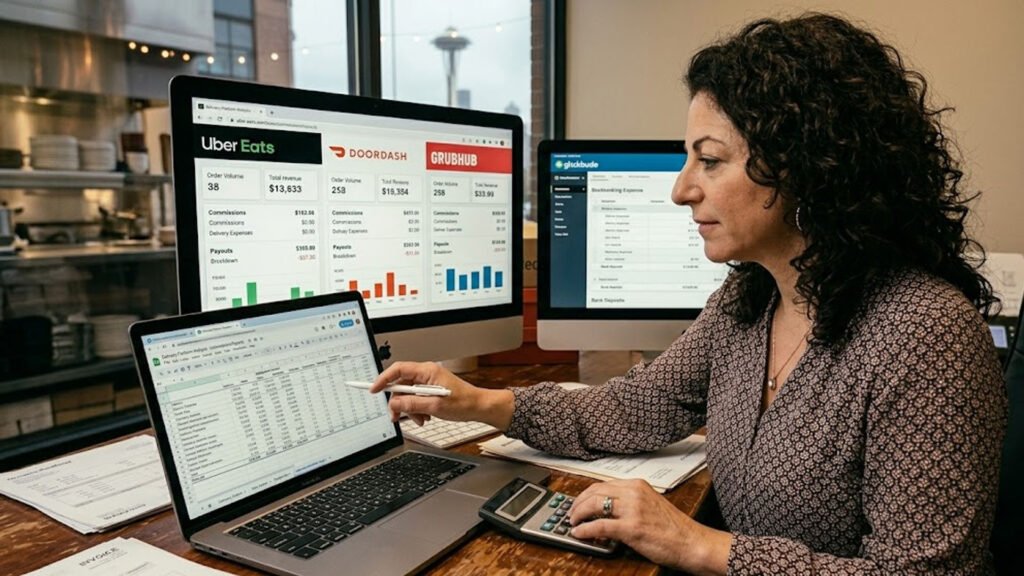
4. Track Uber Eats, DoorDash & Grubhub Fees Accurately
Many Seattle Thai restaurants rely heavily on:
- Uber Eats
- DoorDash
- Grubhub
These platforms:
- Deduct commissions (15–30%)
- Apply marketing fees
- Remit net deposits
- May manage sales tax differently
If bookkeeping records only net deposits:
- Gross revenue is understated
- Platform fees are unclear
- True margin is distorted
Monthly reconciliation must:
- Record gross delivery sales
- Separate commission fees
- Confirm settlement timing
- Align tax treatment properly
Delivery revenue requires detailed tracking to understand profitability.
5. Washington B&O Tax: Gross Receipts Impact Profit
Washington’s B&O tax applies to gross receipts. This means:
- Every dollar of revenue increases liability
- Margin does not affect tax owed
- Revenue misclassification creates exposure
Monthly accrual tracking ensures predictable tax payments, accurate reporting and cash flow stability. Without accrual tracking, payments feel sudden. Predictability protects liquidity.
6. Keep Restaurant Sales Tax Separate From Revenue
Thai restaurants collect sales tax on most transactions. Collected tax must be tracked separately from revenue, accrued properly, reconciled monthly and filed accurately. If sales tax is blended with operating cash, it creates artificial liquidity. Separation protects cash position.
7. Monitoring Prime Cost
Prime cost = Food cost + Labor cost. For restaurants, this is the most important profitability metric. Monthly bookkeeping enables owners to calculate:
- Food percentage
- Labor percentage
- Combined prime cost
If prime cost exceeds sustainable levels, corrective action is required. Accurate books make this calculation reliable.
8. Managing Cash Flow Timing
Cash flow challenges often arise from:
- Payroll cycles
- Vendor payment timing
- Tax obligations
- Delivery platform settlement delays
Monthly financial review allows owners to:
- Forecast 90-day cash needs
- Plan for tax deadlines
- Align vendor payments
- Build reserves during strong months
Forecasting reduces pressure.
9. Stop Small Financial Leaks Before They Grow
Common issues in Thai restaurants include:
- Rising ingredient prices
- Duplicate vendor charges
- Subscription creep
- Packaging cost increases
- Portion inconsistencies
Monthly expense detail review catches these patterns early. Prevention protects profit.
10. Seasonal Revenue Planning
Seattle Thai restaurants experience:
- Summer tourism boosts
- Winter slowdowns
- Weather-related demand shifts
Accurate monthly reporting allows:
- Revenue trend analysis
- Staffing adjustments
- Marketing alignment
- Inventory control
Seasonality should be planned for — not reacted to.
Common Bookkeeping Mistakes Seattle Thai Restaurants Make

- Recording only net delivery deposits
- Ignoring B&O accruals
- Mixing sales tax with revenue
- Reviewing financials only quarterly
- Not reconciling vendor statements
- Relying solely on bank balance
These habits create instability. Structure builds resilience.
What Smart Bookkeeping Looks Like for Thai Restaurants
A disciplined system includes:
- Monthly bank reconciliation
- POS-to-deposit matching
- Vendor invoice verification
- Payroll review
- Prime cost monitoring
- B&O accrual updates
- Sales tax liability tracking
- Delivery platform reconciliation
Consistency creates control.
Why Seattle Restaurants Need Stronger Financial Systems
Seattle’s cost environment includes:
- High wages
- Elevated rent
- Competitive ingredient sourcing
- Strict tax enforcement
Small financial inefficiencies multiply quickly. Margin stability requires discipline.
Signs Your Restaurant Bookkeeping System Needs an Upgrade
You may need stronger bookkeeping infrastructure if:
- Food cost fluctuates unexpectedly
- Labor percentage feels unclear
- B&O payments surprise you
- Delivery profitability is uncertain
- Sales tax creates stress
- CPA cleanup fees are increasing
These are structural signals.
Strong Financial Systems Keep Thai Restaurants Profitable
Thai cuisine is built on balance. Financial systems should mirror that philosophy. Structured bookkeeping protects:
- Ingredient investment
- Labor management
- Tax compliance
- Cash flow stability
- Long-term sustainability
In Seattle’s competitive market, precision protects profitability.
Ready to Strengthen Your Thai Restaurant’s Financial Control?
A structured review can identify:
- Vendor overcharges
- Ingredient cost drift
- Labor inefficiencies
- B&O exposure
- Delivery fee leakage
- Cash flow blind spots
Seattle Thai restaurant owners perform best when financial systems are as disciplined as their kitchens.Schedule your consultation with On Par Bookkeeping LLC.