
Corporate law practices operate very differently from many other legal specialties.
Instead of representing individuals in one-time legal matters, corporate attorneys often serve business clients on an ongoing basis. Companies rely on legal counsel to support everything from contract drafting and regulatory compliance to mergers, acquisitions, and strategic growth initiatives.
Because of this relationship-driven model, many corporate law firms generate revenue through recurring advisory relationships rather than single-case engagements.
Common Billing Structures in Corporate Law
- Monthly retainers
- Ongoing advisory agreements
- Project-based legal services
- Transactional legal work
These arrangements create predictable revenue opportunities, but they also require structured financial systems. Law firms must track recurring payments, monitor client profitability, allocate partner compensation, and manage project-based work alongside advisory services.
In major business markets such as Seattle, where startups, technology companies, and established corporations frequently seek legal counsel, corporate attorneys rely on organized bookkeeping to maintain clarity over complex financial relationships.
This guide explains how bookkeeping systems help corporate lawyers track recurring revenue, measure client profitability, and support the long-term growth of their law firms.
Why Corporate Law Firms Have Unique Revenue Models
Corporate attorneys typically work with businesses rather than individual clients.
Instead of one-time legal matters, corporate lawyers often build long-term relationships with companies that require regular legal guidance.
Key Services Corporate Lawyers Provide
- Drafting contracts and agreements
- Advising on regulatory compliance
- Assisting with corporate governance
- Structuring business transactions
- Negotiating mergers and acquisitions
Because these services are ongoing, corporate law firms frequently develop billing structures designed to support long-term collaboration.
Common Revenue Models in Corporate Law
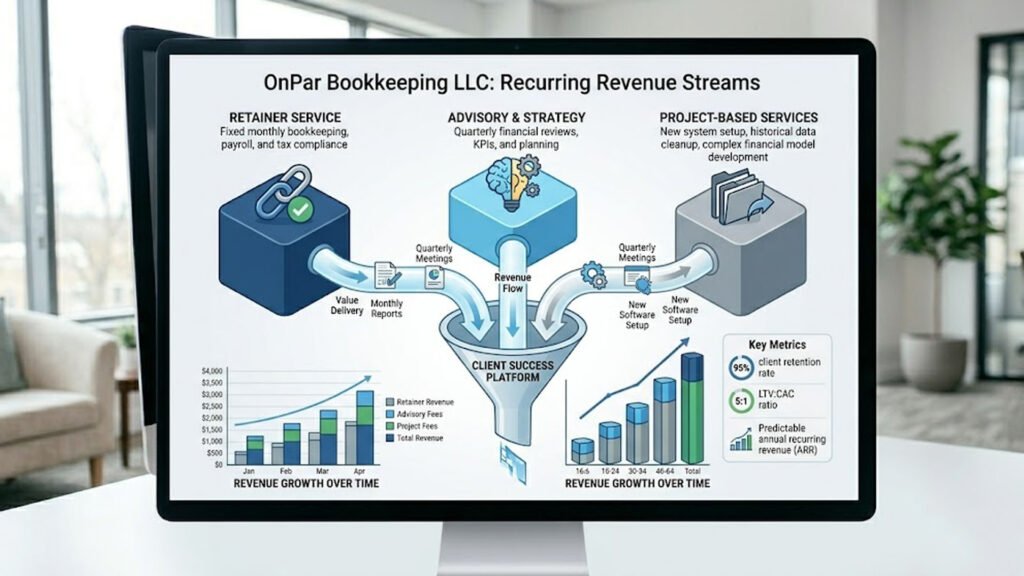
- Recurring monthly retainers
- Annual advisory agreements
- Project-based billing for transactions
- Hourly billing for complex legal matters
This combination of recurring and project-based revenue creates both opportunities and complexity.
What Bookkeeping Systems Must Track
- Recurring client payments
- Legal project revenue
- Partner profit allocations
- Operating expenses related to client service
Without structured bookkeeping, it can be difficult to determine how profitable different client relationships actually are.
Monthly Retainers: Creating Predictable Legal Revenue
One of the most common billing structures in corporate law is the monthly retainer.
A monthly retainer is a fixed payment made by a business client in exchange for ongoing access to legal advice and services.
What Retainers Typically Cover
- Contract reviews
- Employment law guidance
- Regulatory compliance consultations
- General corporate legal advice
Retainers provide several advantages for law firms. They create predictable recurring revenue, which helps stabilize cash flow and support long-term business planning.
For corporate clients, retainers provide convenient access to legal expertise without negotiating fees for each request.
What to Track for Retainer Agreements
- The total retainer amount per client
- The payment schedule
- Services covered by the retainer
- Additional work billed outside the retainer agreement
Maintaining these records ensures the firm can evaluate whether retainer arrangements remain financially sustainable.
Advisory Contracts & Ongoing Legal Counsel
Corporate attorneys frequently serve as outside general counsel for businesses. In this role, the law firm acts as a strategic advisor to the client’s leadership team.
Common Advisory Services
- Reviewing corporate policies
- Assisting with business contracts
- Advising on regulatory compliance
- Supporting strategic business decisions
These engagements often involve ongoing collaboration between attorneys and company executives.
Typical Advisory Contract Structures
- Monthly service agreements
- Quarterly advisory retainers
- Annual legal support contracts
Bookkeeping systems must track these agreements to ensure payments are recorded consistently.
Recurring revenue tracking helps law firms understand how much income is generated from long-term client relationships. This information is essential for planning growth and maintaining financial stability.
Project-Based Legal Work: Tracking High-Value Transactions
In addition to advisory relationships, corporate lawyers frequently handle project-based legal matters.
Examples of Legal Projects
- Mergers and acquisitions
- Corporate restructuring
- Investment transactions
- Shareholder agreements
- Intellectual property licensing
Unlike retainer arrangements, project-based work may generate revenue in larger but less frequent amounts.
What Each Project Involves
- Legal research and due diligence
- Document drafting
- Negotiations between parties
- Regulatory filings
Bookkeeping for Project-Based Work
- Revenue generated from each project
- Expenses associated with the transaction
- Time invested by attorneys and staff
Tracking project-based work allows law firms to evaluate the profitability of major legal transactions.
How to Track Recurring Revenue in a Law Firm
Recurring revenue is one of the most valuable financial components of corporate law practices. Monthly retainers and advisory contracts provide predictable income that supports stable operations.
Key Recurring Revenue Metrics
- Total monthly recurring legal fees
- Number of active retainer clients
- Revenue growth from advisory services
Understanding recurring revenue trends helps firms identify whether their client base is expanding or contracting.
Financial reporting can also reveal opportunities to develop new advisory offerings, such as specialized retainer packages for startups, technology firms, or venture-backed businesses.
Measuring Client Profitability in Corporate Law
Not all clients generate the same level of profitability. Some corporate clients require minimal legal assistance each month, while others require extensive consultations and complex project work.
Metrics to Track Client Profitability
- Revenue generated from each client
- Attorney time spent on the client’s matters
- Project expenses associated with the client
By reviewing these metrics, firms can determine whether certain clients require more resources than expected. This insight helps attorneys adjust pricing structures, retainer agreements, or service expectations.
Partner Compensation & Profit Allocation
Corporate law firms often operate under partnership structures. Partners may share ownership of the firm and participate in profit distribution.
What Bookkeeping Should Track
- Clients originated by each partner
- Billable hours contributed by attorneys
- Revenue generated from specific projects
Accurate financial records help ensure that compensation structures remain transparent and fair while preventing disputes.
Tracking Legal Project Expenses Accurately
Corporate legal transactions can involve a variety of expenses.
Common Legal Expenses
- Due diligence research costs
- Regulatory filing fees
- Document preparation services
- Travel expenses related to negotiations
Bookkeeping systems must record these expenses so they can be properly allocated to specific projects.
Managing Client Payment Cycles Effectively
Corporate clients may pay invoices on different schedules.
Common Payment Terms
- Monthly billing cycles
- Quarterly service payments
- Milestone-based payments for large projects
What to Monitor
- Invoices issued to clients
- Payments received
- Outstanding balances
Tracking payment cycles helps law firms maintain stable cash flow and identify overdue accounts.
Cash Flow Planning for Corporate Law Firms
Even with recurring revenue streams, corporate law firms must monitor cash flow carefully.
Typical Operating Expenses
- Attorney salaries and bonuses
- Office leases
- Legal research software
- Administrative staff compensation
Bookkeeping systems provide insight into revenue trends, expense patterns, and available cash reserves, enabling better financial planning.
Tax Considerations for Corporate Law Firms
Corporate law firms must manage several types of tax obligations.
Common Tax Responsibilities
- Federal income tax
- Payroll taxes for employees
- State business taxes
In certain jurisdictions, firms may also be subject to gross receipts taxes.
Accurate bookkeeping ensures compliance, predictable liabilities, and smoother tax preparation.
Monitoring Operating Expenses for Profitability
Corporate law firms incur several ongoing expenses.
Examples of Operating Costs
- Legal research databases
- Contract management software
- Marketing and client development costs
- Professional licensing fees
Expense tracking helps firms maintain profitability and identify cost-saving opportunities.
Common Bookkeeping Mistakes Corporate Law Firms Make
- Failing to track recurring revenue accurately
- Overlooking project-related expenses
- Not monitoring client profitability
- Relying solely on bank balances
- Inconsistent partner compensation calculations
Consistent bookkeeping prevents these issues and ensures reliable financial insights.
What Proper Bookkeeping Looks Like for Corporate Law Firms
A well-organized bookkeeping system typically includes:
- Monthly bank account reconciliation
- Recurring revenue tracking
- Project-based revenue reporting
- Client profitability analysis
- Partner compensation allocation records
- Operating expense categorization
- Monthly financial statement preparation

Why Financial Clarity Matters for Corporate Lawyers
Corporate attorneys advise businesses on strategic decisions that shape long-term outcomes. Structured bookkeeping provides:
- Reliable financial reporting
- Visibility into recurring revenue streams
- Insight into client profitability
- Clarity in partner compensation structures
These insights allow law firms to grow confidently while maintaining strong client relationships.
Build a Scalable, Profitable Corporate Law Practice
Managing retainers, advisory services, and project-based work requires more than legal expertise — it demands financial clarity and structured bookkeeping systems.
Without accurate tracking of recurring revenue, client profitability, and expenses, corporate law firms risk losing visibility into their true financial performance.If your firm is looking to streamline bookkeeping, improve financial reporting, and gain clarity over your revenue streams, the experts at OnPar Bookkeeping LLC can help. Book your consultation to learn how specialized bookkeeping solutions can support your firm’s growth.