
Artificial intelligence has changed bookkeeping. Transactions are categorized automatically. Receipts are matched instantly. Dashboards update in real time. Financial reports are generated with a click.
For Seattle business owners, this feels like progress, and it is. But automation alone does not eliminate financial risk. In fact, when AI operates without structured oversight, certain risks become harder to detect — not easier.
This guide explains the hidden financial risks AI alone can’t catch and why Seattle businesses operating in Washington’s regulatory environment still require expert review.
This is not a rejection of technology. It is a case for intelligent supervision.
How Fully Automated Bookkeeping Is Changing Seattle Businesses
Many platforms now market:
- Hands-free accounting
- Fully automated categorization
- AI-powered financial insights
- Predictive dashboards
- Self-correcting transaction systems
For early-stage businesses with simple structures, automation can work well. But Seattle businesses rarely remain simple for long. Growth increases complexity. Complexity increases risk.
Automation scales speed. It does not scale judgment.
Why Seattle’s Tax Environment Raises the Stakes
Seattle businesses operate under:
- Washington State Business & Occupation (B&O) tax on gross receipts
- Sales tax with multi-jurisdiction rates
- City licensing thresholds
- High payroll and contractor sensitivity
- Rapid startup growth patterns
Washington’s B&O tax is particularly significant. Because it applies to gross revenue rather than profit:
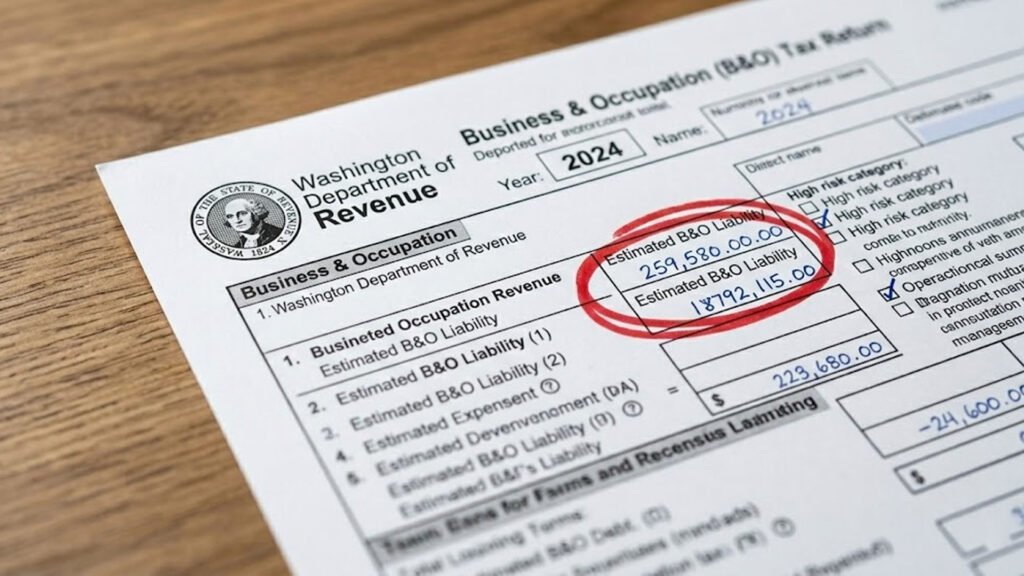
- Revenue misclassification creates immediate exposure
- Growth increases tax liability even during low-margin periods
- Filing mismatches trigger scrutiny quickly
AI categorization systems may process transactions efficiently, but they do not always interpret regulatory nuance accurately. Oversight matters more in Washington than in many other states.
6 Financial Risks AI Bookkeeping Can Miss in Seattle
1. Revenue Misclassification That Impacts B&O
AI relies on pattern recognition. If revenue streams shift, for example:
- Service income expands into product sales
- Consulting becomes subscription-based
- Multi-entity revenue overlaps
Automation may categorize transactions based on historical patterns rather than regulatory accuracy. Incorrect B&O classification can:
- Overstate or understate tax liability
- Create filing discrepancies
- Increase audit risk
Human review ensures classification aligns with Washington requirements.
2. Sales Tax Segregation Errors
Automation may record sales tax collected. It does not always:
- Separate collected tax from operating funds
- Monitor liability accumulation
- Cross-check rate application across jurisdictions
Collected sales tax is not revenue. If it remains blended with operating funds, businesses may unknowingly spend money that must later be remitted. Oversight prevents artificial cash flow.
3. Silent Drift in Expense Categorization
AI systems learn from patterns. If an early categorization was incorrect, automation may reinforce it. Over time, this creates:
- Misaligned expense reporting
- Skewed profitability metrics
- Inaccurate tax deductions
- Confusing financial statements
Without monthly human reconciliation, drift compounds quietly.
4. Missed Strategic Context
AI analyzes transactions. It does not understand:
- Your hiring plans
- Your expansion timeline
- Your financing strategy
- Your industry benchmarks
- Your risk tolerance
Bookkeeping should support decision-making, not simply record activity. Expert oversight interprets data within a business context.
5. Payroll Sensitivity
Seattle’s competitive labor market makes payroll one of the largest fixed expenses. AI can record payroll entries. It does not:
- Evaluate cash flow alignment
- Monitor tax accrual timing
- Flag structural compensation inefficiencies
- Assess contractor classification nuance
Payroll errors create financial and regulatory exposure quickly. Human review reduces this risk.
6. Compliance Notices and Escalation
AI systems do not proactively respond to:
- State notices
- Filing discrepancies
- Payment mismatches
- Regulatory communication
Without expert oversight, minor discrepancies can escalate before being noticed. Proactive monitoring reduces friction.
Why Automated Reports Can Look Accurate — But Still Be Wrong
One of the most significant risks of automation is the appearance of precision. Dashboards look polished. Reports appear complete. Numbers are neatly formatted. But polished does not guarantee accuracy. Without reconciliation and review:
- Bank balances may not match reports
- Accruals may be incomplete
- Liabilities may be understated
- Financial statements may distort reality
Accuracy requires validation.
What Human Oversight Adds to AI Bookkeeping Systems
1. Monthly Reconciliation
Every account is reconciled against actual statements. This confirms:
- Transaction completeness
- Correct balances
- Accurate reporting
2. Tax Liability Review
Expert oversight ensures:
- B&O accruals align with revenue
- Sales tax is properly segregated
- Quarterly payments are forecasted
- Filing consistency is maintained
Taxes become predictable, not stressful.
3. Revenue & Expense Evaluation
Human review ensures:
- Proper classification
- Deduction optimization
- Reporting clarity
- Industry alignment
Financial statements become strategic tools.
4. Cash Flow Interpretation
AI can show historical trends. Experts translate them into:
- Hiring timing
- Pricing adjustments
- Spending controls
- Growth pacing
Interpretation transforms data into direction.
AI + Oversight: The Strongest Model
The question is not whether to use AI. Modern bookkeeping should use:
- Automated categorization
- Bank feed integration
- Pattern recognition
- Digital document management
The key difference is the review. AI handles repetition. Experts handle nuance. Together, they create scalable accuracy.
Why Seattle Businesses Require This Balance
Seattle’s environment includes:
- High fixed overhead
- Aggressive regulatory enforcement
- Competitive growth cycles
- Venture-backed scaling
- Service-based complexity
In this environment, small financial errors compound quickly. Structured oversight protects growth.
Signs AI Alone May Not Be Enough
- Books are not reconciled monthly
- Tax liabilities feel unclear
- CPA performs frequent corrections
- Revenue streams are expanding
- Multiple jurisdictions apply
- Payroll complexity is increasing
Automation without review creates drift.
When Fully Automated Systems Work
AI-only models may work temporarily for:
- Very small sole proprietors
- Minimal transaction businesses
- Single-revenue stream operations
- Early-stage ventures with limited activity
But as complexity increases, oversight becomes necessary.
Financial Infrastructure in 2026
Bookkeeping is no longer manual paperwork. It is:
- Compliance infrastructure
- Risk management
- Cash flow control
- Growth support
AI strengthens infrastructure. Expert oversight stabilizes it.
The Cost of Ignoring Oversight
When automation operates alone, consequences often include:
- Cleanup fees
- Tax corrections
- Penalty exposure
- Reporting confusion
- Delayed investor readiness
- Cash flow stress
Prevention is less expensive than repair.

Final Thoughts: Intelligent Systems Require Intelligent Supervision
Seattle businesses benefit from technological advancement. AI increases speed and efficiency. But financial accuracy, compliance nuance, and strategic interpretation still require experience. The strongest bookkeeping systems in 2026 are not fully automated. They are intelligently supervised.
Automation accelerates. Oversight protects.
Need a Professional AI Bookkeeping Review in Seattle?
OnPar Bookkeeping LLC helps Seattle businesses combine intelligent automation with expert oversight to prevent tax errors and reporting drift.
Schedule a bookkeeping consultation today and ensure your financial systems are built for compliance and growth.